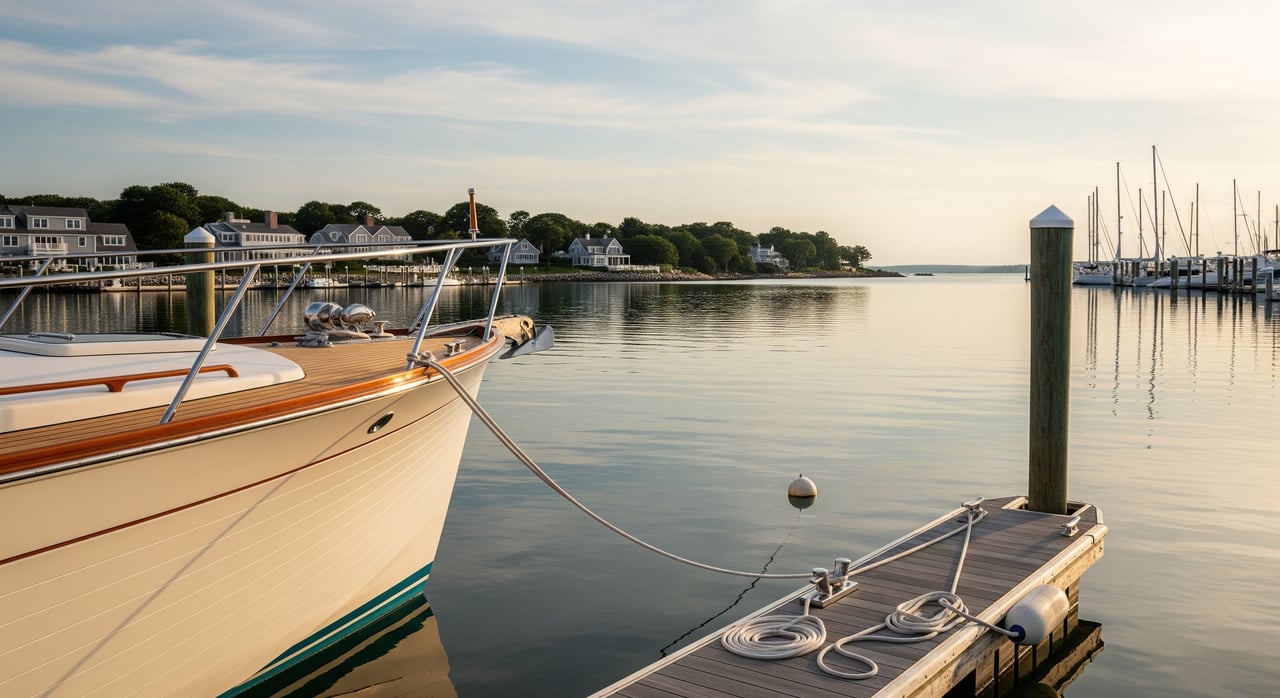
Do you picture your weekends starting on the dock and ending with a sunset run across Narragansett Bay? If you are looking at East Greenwich, you are in the right place. This guide gives you a clear look at marinas, moorings, launches, permits, and what to consider if you want a waterfront home that fits your boating life. You will leave with practical steps to plan your season and buy with confidence. Let’s dive in.
East Greenwich on the water
Greenwich Cove and Narragansett Bay
East Greenwich sits on Greenwich Cove, which opens to Greenwich Bay and the wider Narragansett Bay. You get sheltered water for easy day boating and quick access to open bay routes for longer cruises. Water depth and wind exposure change as you move from the inner cove to the bay, so local knowledge helps.
Tides and navigation
Expect normal Rhode Island tidal influence with currents that vary by channel. Some stretches near marshes and mudflats can be shallow at low tide. Use current nautical charts and pay attention to aids to navigation when moving in and out of the cove.
Where you can keep a boat
Private yacht clubs
Member-focused yacht clubs typically offer docks, moorings, and social or racing programs. Reciprocity with other clubs can expand your cruising options. Availability and membership policies guide your access, so plan ahead if a club lifestyle matters to you.
Commercial marinas
You will find commercial marinas in and around East Greenwich that serve seasonal and transient boaters. Typical offerings include slips with electricity and water, fuel on-site or nearby, parking, and guest amenities. Summer demand is high. If you need a transient slip, make reservations early.
Mooring fields
Moorings can be managed by the town, a club, or a marina operator. They are often seasonal with assigned mooring balls and required permits and inspections. Many homes do not include a dedicated mooring, so verify any claimed rights, transfer rules, and fees before you buy.
Public launches
There are municipal and regional public ramps for trailerable boats and small craft. Kayak and dinghy put-ins are common, but capacity, hours, and parking vary. If you plan to launch regularly, confirm rules and peak times to avoid delays.
Nearby full-service boatyards
For major refits, haul-outs, or large winter storage, many owners use facilities in nearby harbors. Regional choices often include ports in Warwick, North Kingstown and Wickford, and Bristol. Factor travel time and service scheduling into your seasonal plan.
What amenities to look for
Dockside essentials
Look for fuel, pump-out service, and proper wastewater handling. Check for electricity and potable water at slips that match your boat’s needs. Reliable utilities make overnighting smoother.
Comfort and security
Restrooms, showers, laundry, and Wi‑Fi add comfort for longer stays. Parking rules, guest access, lighting, and on-site staff shape convenience and security. Ask about access hours and how visitors are managed.
Maintenance and repair
Some marinas coordinate mobile mechanics, riggers, and electricians. Others are near full-service yards with travel lifts and winter hardstand. If you cruise often, identify your go-to service providers before the season gets busy.
Seasonal operations
Most facilities run full staffing in spring through fall, with reduced winter hours. Winter storage and shrinkwrap may be available, though some marinas expect you to move the boat off-site. Clarify dates for haul-out, relaunch, and any winter access rules.
Permits, rules, and safety
Mooring permits and harbor management
Moorings typically require a permit through the town or a state agency. Expect renewal timelines, inspection requirements, and fees. Waiting lists can exist, so apply early if a town-managed mooring is part of your plan.
Registration and boating laws
Rhode Island requires vessel registration and compliance with boating safety laws, including required equipment and operator rules. Review regulations before launching so you avoid surprises during the season.
Docks and shoreline permits
If you are considering a property with a private dock or plan to build or replace one, permits are usually required from the Rhode Island Coastal Resources Management Council and may involve local approvals. Confirm the permitting history and conditions before you submit an offer.
Environmental protections
Coastal wetlands, shellfish beds, and eelgrass areas are protected. You may encounter idle zones or anchoring limits. No-discharge rules and pump-out access help keep the cove healthy. Follow posted guidelines to protect local resources.
Weather, storms, and ice
Hurricanes and nor’easters are part of New England life. Most marinas have storm policies for haul-out or evacuation. In some winters, ice can affect docks and moorings. Have a written plan for big weather and confirm how your marina handles storm prep.
Insurance and liability
Marina and mooring contracts often require proof of insurance and may specify coverage limits. If you are buying on the waterfront, consider flood and wind coverage for the home in addition to boat liability insurance. Ask for sample contracts to understand the fine print.
Accessibility
Public facilities may include ADA features, but access at private marinas varies by policy and infrastructure. If accessibility is important to you or your guests, verify ramp inclines, slip access, and parking before you commit.
Choosing a waterfront property
Dock rights vs. access
Not all waterfront homes have a private dock. Some properties have deeded dock or pier rights, others have riparian privileges to apply for a dock, and some have no deeded access at all. Confirm what conveys in writing and whether any agreements are leases or shared-use arrangements.
Access and convenience
A walk-to-boat home offers unmatched convenience but adds maintenance and permit responsibilities. Driving to a marina can reduce upkeep and may increase amenity access. Decide which trade-offs fit your boating style.
Noise and weekend traffic
Summer weekends bring more boat traffic and activity. Homes closer to club docks or main channels may experience more wakes and sound. Inner cove settings can be quieter but may be shallow at low tide.
Maintenance and cost
Docks, bulkheads, and seawalls need regular care, especially after winter storms. Budget for inspections, repairs, and potential assessments if you are part of a shared marina or association. Insurance and taxes can also be higher for waterfront parcels.
Flood risk and resilience
Coastal homes face elevated flood and storm surge risk. Review flood zone maps, elevation requirements for improvements, and the condition of shoreline protection. Consider long-term resilience, including elevation of systems and any community adaptation projects.
Resale considerations
Slip rights, mooring availability, and a harbor’s capacity can boost appeal for future buyers. Understand HOA covenants or marina rules that may limit vessel types, size, or number to protect your resale position.
A simple due diligence checklist
- Verify contact information for the local harbormaster, nearby marinas, the nearest full-service yard, and public launches.
- For marinas, confirm slip type, power and water service, fuel and pump-out availability, transient policies, seasonal dates, and winter storage options.
- Ask about mooring permit procedures, inspection schedules, fees, and any waiting list details.
- Review dock and pier permitting history for properties you like and confirm current compliance.
- Check current charts and any recent notices for shoaling, dredging, or buoy changes in Greenwich Cove and approach channels.
- Request sample marina contracts and insurance requirements. Get homeowner and boat insurance quotes for specific addresses and vessel sizes.
- For waterfront homes, verify whether dock rights or a mooring assignment convey. Review any shared pier agreements and easements.
- Clarify hurricane policies, winterization timing, and any dredging or harbor projects that could affect access.
When you match the right slip or mooring with the right property, East Greenwich delivers a low-stress boating life with quick access to Narragansett Bay. If you want a clear, curated plan that aligns your boating goals with the right home, we are here to help. Connect with ONE Residential for tailored guidance, discreet property previews, and a seasoned strategy from first viewing to closing.
Request your next steps with ONE Residential.
FAQs
What types of marinas are in East Greenwich?
- You will find private yacht clubs for members, commercial marinas with seasonal and transient slips, and mooring fields managed by town, club, or marina operators.
How do mooring permits work in East Greenwich?
- Moorings typically require a permit, recurring inspections, and fees, with assignments and any waiting list coordinated by local harbor management or a designated operator.
Can I build a private dock on Greenwich Cove?
- Dock construction or replacement usually needs state coastal permits and may require local approvals, so review the property’s permit history before planning improvements.
What should I ask before signing a seasonal slip?
- Confirm power and water specs, fuel and pump-out access, parking and guest rules, security and staffing, storm policies, seasonal dates, and winter storage options.
How does hurricane season affect boat storage?
- Many facilities have storm plans for haul-out or evacuation, so know your marina’s procedures and timelines and keep a written checklist for your vessel.
What should waterfront buyers budget for upkeep?
- Plan for dock, bulkhead, and seawall maintenance, insurance and flood coverage, potential association assessments, and periodic inspections after winter storms.