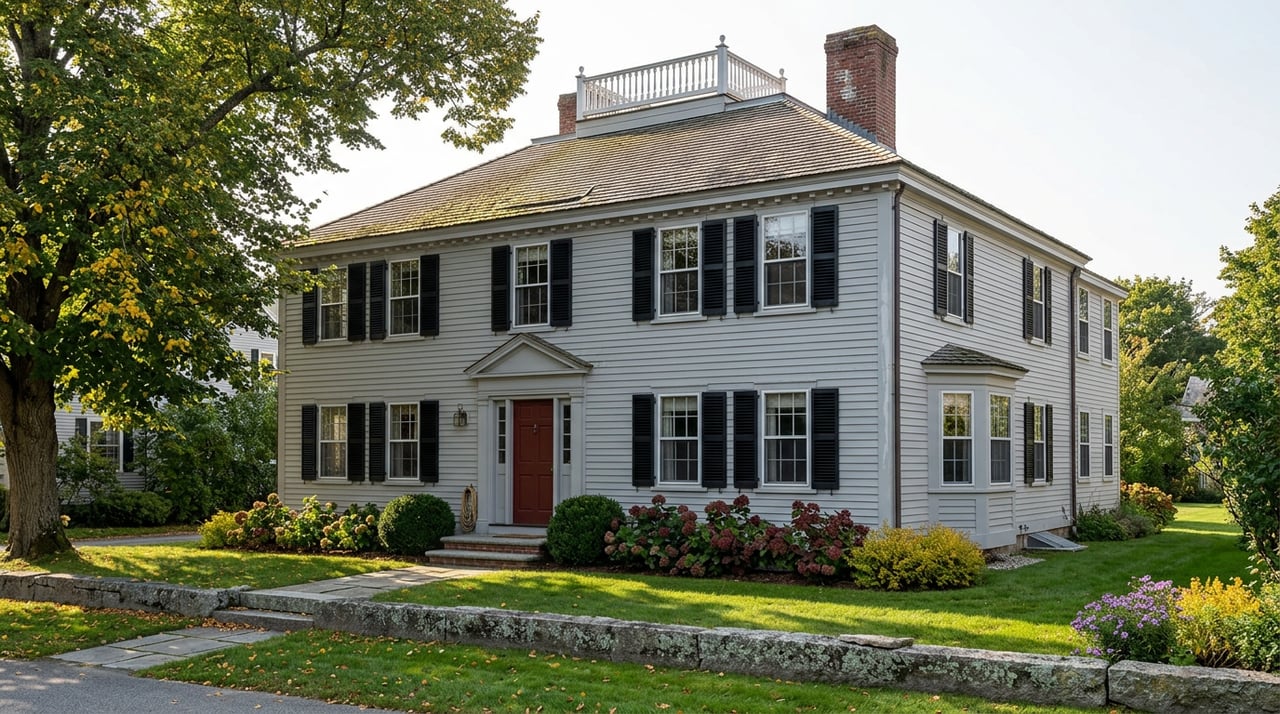
Last November, a homeowner in East Greenwich's historic district replaced the trim around a rear door and moved on with life. No permit pulled, no application filed, nothing dramatic. It only became a problem when town staff realized the work was already finished and had to bring it before the Historic District Commission after the fact, the kind of retroactive hearing nobody wants on their closing timeline. The property had scored well on a prior preservation survey, a "good rehab job" in the commission's own language, which made the oversight almost beside the point. The rule applies whether the house is a showpiece or a fixer-upper.
That single incident says less about one careless contractor and more about how East Greenwich's historic district actually works. The bigger story isn't that the district asks homeowners to clear a design review before touching a window or a door. It's that the tax credit built to soften the cost of doing that work correctly was never written with those homeowners in mind.
What a Certificate of Appropriateness Actually Covers
Buy a house inside East Greenwich's historic district, roughly the Main Street corridor and the Hill and Harbour area above Greenwich Cove, and you inherit a review process for nearly anything visible from the street. Window replacement, door swaps, additions, roofing, siding, paint colors, fences. All of it routes through the town's Historic District Commission before a building permit can be issued, under the standards laid out in Article XI of the town's zoning ordinance.
Not every project needs a full public hearing. The town runs three tiers of review: some repairs made in kind are exempt outright, some categories qualify for a faster staff-level sign-off, and anything more substantial goes before the full Commission, which meets roughly once a month. The standards themselves get specific. One of the most commonly cited, Standard 7, states plainly that vinyl and other modern composition sidings are not appropriate for the district's buildings and won't be approved. If a homeowner disagrees with a Commission decision, there's a path to appeal to the town's Zoning Board of Review, but it's a narrow window, not a second chance to relitigate taste.
None of this is secret. It's public record, filed in Commission minutes going back years, and it's the reason a straightforward exterior refresh in this part of town takes longer and costs more than the identical project three blocks west.
Two Towns Inside One Zip Code
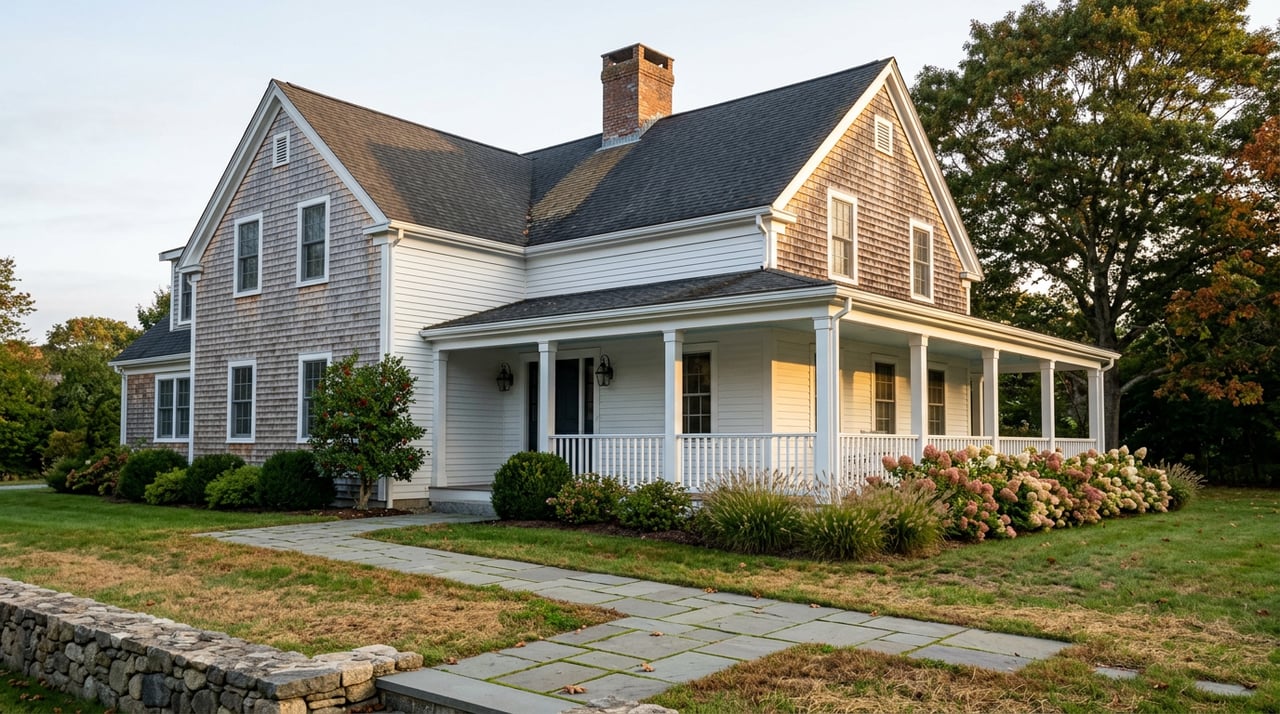
East Greenwich's housing stock splits cleanly along a line most out-of-town buyers don't see until they're already under contract. Downtown and along the Hill and Harbour district, homes skew toward the Federal, Georgian Revival, and Second Empire styles the town was built on, properties like the c.1777 Captain Jonathan Salisbury House, since subdivided into condominiums, or a renovated 1928 home a short walk from Main Street that now carries a legal accessory dwelling unit. West of Route 1, the housing stock is newer, in neighborhoods like River Farms and Cindyann Farms, where a kitchen gut or a two-story addition moves through the town's standard permitting process with no design review at all.
| Historic core (Main St / Hill & Harbour) | West of Route 1 | |
|---|---|---|
| Design review required | Yes, Certificate of Appropriateness for most exterior work | No |
| Typical housing era | Late 1700s through early 1900s | Mostly postwar and later |
| Renovation timeline | Adds a monthly hearing cycle for anything beyond staff-level review | Standard permit timeline |
| Material flexibility | Restricted (no vinyl siding, matching sash profiles, etc.) | Homeowner's choice within code |
A design-build firm that recently completed a new custom home inside the historic district put a number on this: from initial design to move-in, the project took twelve months, largely because of the extra coordination a build inside the district's boundaries requires. That's not a complaint about the process. It's a fixed cost that a comparable new build west of Route 1 simply doesn't carry.
The Tax Credit Built for Landlords, Not Homeowners
Rhode Island does offer a Historic Preservation Tax Credit to help offset exactly this kind of added expense, worth 20 percent of qualified rehabilitation costs for most projects and 25 percent when part of the building is used for a trade or business. It's a real incentive, and it has helped finance hundreds of historic building rehabs across the state.
It also has a requirement that quietly rules out most East Greenwich homeowners before they get started: the property has to be income-producing. The credit is written for buildings that are depreciable, meaning they're used in a trade or business or held for rental income. A family buying a Federal-era house on the Hill to live in it doesn't qualify, full stop.
The homeowner absorbing the cost of a Certificate of Appropriateness and the taxpayer eligible for the credit meant to offset that cost are, by design, two different people.
The town does run its own, separate mechanism. Commission meeting records show the Historic District Commission periodically approves what it calls a "Historic Tax Credit Application" for individual residential addresses, forwarding the approval directly to the town's tax assessor rather than the state Division of Taxation. It's a real, usable path for an actual homeowner, distinct from the larger state program, though it operates on the town's own terms rather than the 20 to 25 percent income-tax offset available to income-producing rehabs.
A Credit That Already Ran Out This Summer
There's a timing wrinkle worth knowing if you're weighing a purchase in the district right now. Rhode Island law set June 30, 2026, as the last date new credits could be reserved under the state's Historic Preservation Tax Credit program. A bill to extend the sunset another five years, to 2031, and raise the credit rate for housing-heavy projects passed the Senate in early June but stalled after being referred to House Finance, and the deadline came and went without a signed extension. That mostly affects developers eyeing commercial or multifamily rehabs in the district right now, since the reservation queue for new projects is the piece that lapsed. For an owner-occupant, it's less a change in plans and more a confirmation of the pattern: the incentive structure around historic preservation in Rhode Island was built for investment property first, and even that piece is currently on hold.
What the 2026 Numbers Are Actually Telling You
Look at East Greenwich's numbers this August and you'll find two stories that don't agree with each other. Townwide, one major portal put the median list price at roughly $800,000 in August 2026, with homes moving in a median of 25 days, a 24 percent drop in days on market compared to a year earlier. That same report described the market as "slowing down," a characterization that sits oddly next to a falling days-on-market figure. Homes selling faster than they did last year is not what a slowdown looks like. Treat that kind of headline as a label the portal slapped on afterward, not a conclusion its own numbers actually support.
Meanwhile, Downtown East Greenwich specifically, the historic core itself, showed a median home sale price of $599,900 in August 2026, down 20 percent year over year, with homes taking 54 days to sell on average, roughly double the townwide pace. Part of that gap is a small-sample effect. Downtown had only two single-family homes actively listed at the time this data was pulled, ranging from $799,000 to nearly $1.95 million. When a submarket that thin closes even one or two lower-priced properties in a given month, the median swings hard without reflecting any real shift in what buyers are willing to pay for a well-kept Federal or Colonial near Main Street.
But the longer time on market is harder to explain away. A buyer purchasing in the historic core is also purchasing the Certificate of Appropriateness process, the disclosure that comes with it, and, for anyone financing or budgeting a future renovation, the reality that the state credit built to help pay for that work won't apply to their own house. That's friction a lender, an appraiser, and a buyer all have to work through before a deal closes, and it shows up in the calendar even when it doesn't show up in the price.
A Few Straight Answers
Does East Greenwich require sellers to disclose historic district status? Yes. Rhode Island's seller disclosure requirements call for notice when a property sits within a historic district and may be subject to construction or renovation limits, so this comes up before closing, not after.
Can a homeowner claim the state historic tax credit for their own residence? No. The state credit requires the property be used for income production, meaning rental or commercial use. An owner-occupied home doesn't meet that bar, regardless of how significant the rehab.
Does this apply to all of East Greenwich, or just certain streets? Only the designated historic district, largely the Main Street corridor and the Hill and Harbour area. Homes west of Route 1, in neighborhoods like River Farms and Cindyann Farms, follow the town's standard permitting process with no Certificate of Appropriateness required.
None of this makes the historic district a bad place to buy. It makes it a different kind of purchase, one where the character that draws people to Main Street comes with a review process and a financing picture that a townwide median price won't show you. If you're weighing a Federal-era house on the Hill against a newer build west of Route 1, that distinction is worth pricing in before you write an offer, not after.
ONE Residential works both sides of that line regularly, from Hill and Harbour rehabs to newer construction across East Greenwich. If you're trying to figure out what a specific property's historic status actually means for your renovation plans and your timeline, request a private consultation and we'll walk through it property by property.